

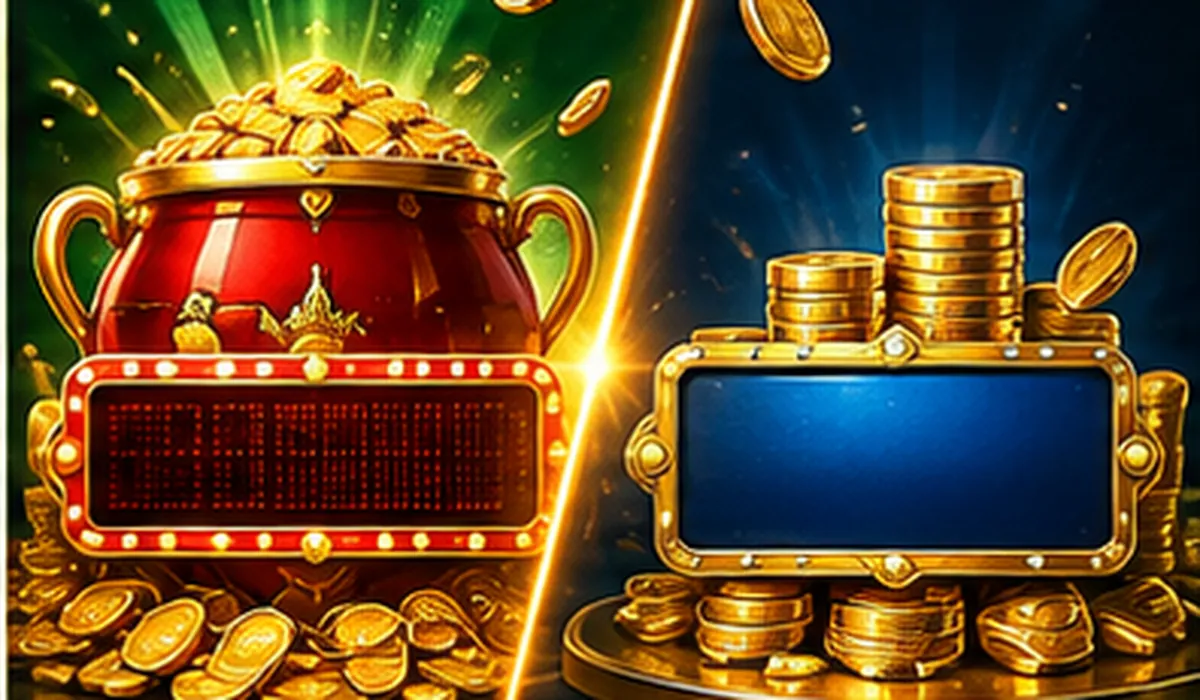
The main difference between progressive and fixed jackpots is how the top prize is determined. A fixed jackpot has a stated prize value or defined award that does not continuously grow from player activity. A progressive jackpot can increase over time according to the game or network rules until it is won or reset.
That difference affects how the jackpot is displayed, how the prize is funded, and what players should verify before assuming the number on screen belongs to a particular game or stake level.
How a fixed jackpot works
A fixed jackpot is tied to a defined award rule. The game might show a GRAND prize worth a particular multiplier, a set credit value, or another fixed amount according to the paytable.
The prize can still differ by denomination, stake, configuration, or game version. “Fixed” means it is not continuously climbing because other eligible bets are feeding a shared meter.
Practical Example
Imagine a slot where the GRAND award is listed as 5,000× the triggering stake. If the qualifying stake is ₱10, the illustrative award would be calculated from that rule. The displayed value does not need a network meter to grow over time.
The exact trigger can still be random, symbol-based, bonus-based, or feature-based depending on the game.
How a progressive jackpot works
A progressive jackpot uses a meter that can increase as qualifying play contributes under the game’s rules. The meter may be connected to one machine, one game family, one operator, or a wider network.
When the jackpot is won, the meter normally resets to a seed value or another defined amount.
Players should not assume that every bet contributes equally or that every stake is eligible. Progressive rules can specify minimum bets, eligible denominations, game modes, or separate jackpot tiers.
Local, linked and networked progressives
Progressive jackpots can have different scopes:
| Type | Typical scope |
|---|---|
| Standalone/local | One game or machine instance |
| Linked | Several machines or games within a system |
| Networked | A broader group of connected eligible games |
The wider the network, the more sources may contribute to the meter, but that does not tell you the probability of winning. Prize size and hit probability are separate questions.
Jackpot tiers can mix fixed and progressive values
Many modern games show MINI, MINOR, MAJOR, and GRAND tiers. Do not assume all four tiers follow the same model. A game can use fixed lower tiers and a progressive top tier, or the opposite arrangement.
The information screen should state which awards are fixed, which are progressive, and how each is triggered.
Practical Example: two games with similar artwork
Game A displays:
- MINI: fixed 20×
- MINOR: fixed 50×
- MAJOR: fixed 200×
- GRAND: fixed 2,000×
Game B displays:
- MINI: fixed amount
- MINOR: fixed amount
- MAJOR: progressive meter
- GRAND: progressive network meter
Both can look like “jackpot slots,” but the prize mechanics are different. A screenshot of a large meter in Game B does not describe Game A.
Does a progressive jackpot change RTP?
The answer depends on the title and configuration. Some games calculate a portion of theoretical return through jackpot awards; others separate components differently.
Players should rely on the published RTP for the exact game version rather than trying to estimate RTP from the meter size alone. A large displayed jackpot can make the prize visually prominent without telling you how frequently it is hit.
What “must be won by” means
Some jackpot systems advertise a must-be-won-by value. That means the jackpot has a rule requiring an award before or at a stated threshold. It does not mean a player can know which spin will win.
The meter moving closer to the threshold can change the context of the promotion, but it does not turn the next spin into a certainty.
Jackpot trigger vs scatter trigger
A jackpot can be triggered in several ways:
- landing a particular symbol combination;
- entering a jackpot bonus;
- collecting enough feature symbols;
- random award logic under the game rules;
- reaching a prize wheel or pick feature.
A scatter is not automatically a jackpot symbol. Some games use scatters to open free spins while a separate symbol or random mechanism controls the jackpot.
What to verify before playing
Check:
- whether the displayed amount is fixed or progressive;
- which jackpot tiers are active;
- whether a minimum stake is required;
- whether the jackpot is local or networked;
- whether bonus buy or special modes remain eligible;
- how the prize resets;
- whether the displayed currency matches the account currency;
- whether the game rules explain the trigger.
These checks are more useful than following a meter because someone says it looks “due.”
Common misunderstandings
“A progressive jackpot must pay soon because it is large.” Size alone does not reveal the next outcome.
“All jackpots are progressive.” Many games use fixed jackpot tiers.
“Higher stake always gives the same jackpot chance.” Eligibility and contribution rules vary.
“The jackpot meter is the same on every casino.” A network can be shared, local, or configured differently.
“Jackpot slots are automatically higher RTP.” RTP must be checked for the specific version.
Fixed vs progressive: which is easier to understand?
Fixed jackpots are usually simpler because the award rule is stable. Progressive jackpots add meter, network, eligibility, and reset rules.
That does not make one automatically better. A player who values clarity may prefer fixed awards; another may enjoy the visible growth of a progressive meter. Either way, the jackpot should be treated as an uncertain game outcome, not a savings target.
Related ScatterPanalo Reading
How jackpot displays can create confusion
A lobby can show a large jackpot figure beside several games, but the number may refer to a shared network prize rather than a jackpot unique to every title shown. The game itself should confirm whether it participates in that network and whether all stake levels are eligible. A promotional banner is not a substitute for the jackpot rules.
Currency can also matter. If an account displays Philippine pesos while the underlying network uses another base currency, the interface may convert the meter for display. The visible number can therefore move because of both jackpot growth and currency conversion. Players should rely on the current in-game amount and rules rather than a screenshot saved earlier.
Reset value and seed value
After a progressive jackpot is awarded, many systems do not restart at zero. They reset to a seed value funded under the jackpot rules. This explains why a meter can immediately show a substantial amount after a win.
The seed does not mean the next jackpot is easier or harder to hit; it is simply the starting displayed prize for the new cycle. Likewise, the contribution rate tells how the meter grows, not when it will be awarded.
Comparing jackpot games responsibly
A practical comparison should include the normal game first: RTP, volatility, bet range, base features, and how much of the experience depends on the jackpot. If a title is enjoyable only because of the headline GRAND amount, a player may be overlooking the much more frequent base-game outcomes that shape most of the session.
Key takeaway
A fixed jackpot tells you what the prize rule is. A progressive jackpot tells you that the prize can grow under a contribution system. To understand either one, verify the trigger, stake eligibility, tier rules, and published game information.
FAQs
What is a progressive jackpot?
A jackpot whose displayed value can grow according to the connected game or network rules until it is won or reset.
What is a fixed jackpot?
A jackpot with a defined award rather than a continuously increasing shared meter.
Can one game have both?
Yes. Different tiers can use different prize structures.
Does a bigger jackpot mean better odds?
No. Prize size does not by itself show hit probability.
Should players chase a rising meter?
No. A rising meter does not predict the next result.
Responsible Play
Jackpots are uncertain outcomes. A rising meter is not money that must be won by a particular player. Set limits and do not chase a jackpot because of its displayed size. 21+ only.
Sources
- Big Time Gaming descriptions of Megapots and related mechanics
- Current game paytables and jackpot information screens
Mga sanggunian at dagdag na mapagkukunan
PAGCOR resource links checked: . Ang mga link na ito ay resources; hindi endorsement o personal game testing.